Droplets Coulomb Fission
Spontaneous Coulomb fission concerns the instability and breakup of electrically charged liquid drops under the combined action of electrostatic stress and surface tension.
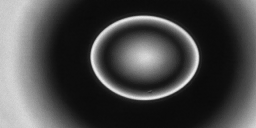
Spontaneous Coulomb fission of water droplets on lubricated surfaces describes how electrically charged droplets deform and ultimately break apart when electrostatic forces overcome the stabilizing effect of surface tension. The phenomenon is governed by a subtle balance between charge accumulation, capillary pressure, viscous dissipation, and the interfacial properties of the lubricating layer. Unlike droplets resting on ordinary solid surfaces, droplets on lubricated substrates experience reduced pinning and greater mobility, which can significantly alter the onset and morphology of breakup. These conditions give rise to rich electrohydrodynamic behavior, including shape instabilities, tip formation, charge redistribution, and satellite droplet emission. Studying these dynamics helps clarify how electric fields interact with soft fluid interfaces in low-friction environments. This understanding is relevant to broader problems in fluid transport, surface engineering, and electrically controlled manipulation of liquids. (Lin et al., 2026).

References
2026
-
 Spontaneous Coulomb fissions of drops on lubricated surfacesProc. Natl. Acad. Sci. U. S. A., May 2026